Showing posts with label Lasers. Show all posts

Wednesday, 2 September 2026

What Is a Biometry Eye Test?

​A biometry eye test measures the dimensions of your eye to help an ophthalmologist plan cataract or lens surgery. The measurements may include the eye's length, corneal power, and other features used to calculate the power of an intraocular lens (IOL).

Because every eye is different, a biometry eye test is an essential part of personalized cataract planning. It is much more than a routine eyesight examination.

What Does a Biometry Eye Test Measure?

A biometry eye test measures the eye's axial length and provides important information about the cornea and front structures of the eye. These measurements are combined with your eye examination and medical history to estimate the IOL power that may provide the best possible visual outcome.

The American Academy of Ophthalmology states that ocular biometry is used to measure axial length before cataract surgery. The testing method depends on the clarity of the eye and the individual clinical situation.

Why Is a Biometry Eye Test Needed Before Cataract Surgery?
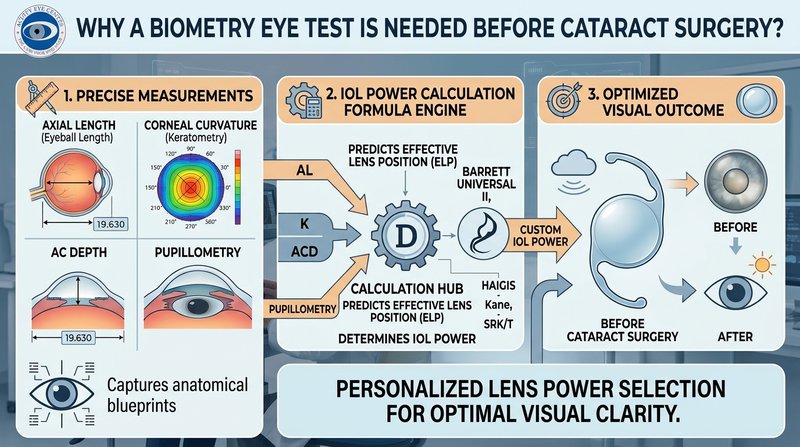
Before cataract surgery, a biometry is performed to help determine the correct artificial lens that will replace the cloudy natural lens.

The biometry allows the surgical team to make accurate calculations, although no test can guarantee a specific visual result. Other factors—including the health of the cornea, retina, optic nerve, previous eye surgery, and your visual expectations—also influence the final outcome.

Acuity Eye Center offers biometry eye testing and IOL calculation as part of its comprehensive ophthalmic services.

Is a Biometry Eye Test Painful?

A biometry eye test is usually painless. Most modern optical biometry devices are non-contact, meaning they measure your eye without touching its surface.

If a dense cataract or another condition prevents accurate optical measurements, your ophthalmologist may recommend an alternative method to complete the biometry eye test.

What Can Affect the Accuracy of a Biometry Eye Test?

The accuracy of a biometry eye test can be influenced by several factors, including:

  • Dense cataracts
  • Corneal irregularities
  • Difficulty maintaining steady fixation
  • Previous laser vision correction or refractive surgery
  • Other eye diseases

If necessary, your ophthalmologist may repeat the biometry eye test or use another measurement technique to improve accuracy.

The American Academy of Ophthalmology also notes that cataract planning considers corneal power, anterior chamber depth, retinal health, and optic nerve condition in addition to biometry measurements.

Questions to Ask Before Your Biometry Eye Test and IOL Calculation

To better understand your treatment plan, consider asking:

  • Which measurements were taken during my biometry eye test?
  • Were the measurements reliable and repeatable?
  • Which IOL options are suitable for my eyes?
  • Will I need additional tests such as corneal topography?
  • How much will I still depend on glasses after surgery?
  • Could another eye condition affect my final vision?

What Should You Bring to Your Biometry Eye Test Appointment?

To get the most from your biometry eye test, bring:

  • Your current glasses
  • Previous eye examination reports
  • A list of medications
  • Records of previous eye surgeries

Also inform your ophthalmologist if you have diabetes, glaucoma, retinal disease, or have previously undergone laser vision correction.

Final Takeaway

A biometry eye test is a key step in planning cataract or lens replacement surgery. It provides detailed eye measurements that help your ophthalmologist choose the most appropriate intraocular lens for your individual eye. While a biometry eye test greatly improves surgical planning, the final visual outcome also depends on your overall eye health and other clinical factors. Discuss your measurements and treatment options with your ophthalmologist to understand what results are realistically achievable.

Thursday, 18 January 2024

Glaucoma Awareness Month

January is recognised as Glaucoma Awareness Month, a time dedicated to raising awareness about this sight-threatening disease. Glaucoma is often called the "silent thief of sight" because it can progress slowly and without noticeable symptoms until significant vision loss occurs.

جنوری کو گلوکوما آگاہی مہینہ کے طور پر پہچانا جاتا ہے، یہ ایک ایسا وقت ہے جو بینائی کے لیے خطرناک بیماری کے بارے میں بیداری پیدا کرنے کے لیے وقف ہے۔ گلوکوما کو اکثر "نظر کا خاموش چور" کہا جاتا ہے کیونکہ یہ آہستہ آہستہ اور نمایاں علامات کے بغیر بڑھ سکتا ہے جب تک کہ بصارت میں نمایاں کمی واقع نہ ہو جائے۔

Understanding Glaucoma

Glaucoma is a group of eye conditions that damage the optic nerve, which is responsible for transmitting visual information from the eye to the brain. The most common type of glaucoma, called primary open-angle glaucoma, occurs when there is an increase in intraocular pressure (pressure inside the eye) that damages the optic nerve over time.

گلوکوما آنکھوں کے مسائل کا ایک گروپ ہے جو آپٹک نرو کو نقصان پہنچاتا ہے، جو بصری معلومات کو آنکھ سے دماغ تک پہنچانے کی ذمہ دار ہے۔ گلوکوما کی سب سے عام قسم، جسے پرائمری اوپن اینگل گلوکوما کہا جاتا ہے، اس وقت ہوتا ہے جب آنکھ کے اندر دباؤ میں اضافہ ہوتا ہے جو وقت کے ساتھ ساتھ آپٹک نرو کو نقصان پہنچاتا ہے۔

Risk Factors and Prevention

Risk Factors

While anyone can develop glaucoma, certain factors may increase your risk:

  • Age: The risk of developing glaucoma increases with age.
  • Family History: Having a close relative with glaucoma puts you at higher risk.
  • Ethnicity: People of African, Hispanic, or Asian descent are more prone to developing certain types of glaucoma.
  • Medical Conditions: Diabetes, high blood pressure, and heart disease may increase your risk.

Although there is no known way to prevent glaucoma entirely, early detection and treatment can help slow down its progression and minimize vision loss. Regular comprehensive eye exams are crucial for detecting signs of glaucoma before it causes irreversible damage.

Glaucoma Damage

Symptoms and Diagnosis

In its early stages, glaucoma typically does not cause any noticeable symptoms. As the disease progresses, however, individuals may experience:

  • Gradual loss of peripheral vision
  • Tunnel vision
  • Blurred vision
  • Halos around lights
  • Severe eye pain or headache (in cases of acute angle-closure glaucoma)

If you experience any of these symptoms or have concerns about your eye health, it is important to schedule an appointment with an eye care professional for a comprehensive examination.

Here is the message from our lead consultant Dr Zia Ul Mazhry,

Glaucoma is known as a silent killer of sight in English. Sariq un Nazar is the name given to it in Arabic, meaning thief of the sight. Patients are often surprised when their ophthalmologist tells them they have glaucoma because they don’t have symptoms. There is no need to be scared about the diagnosis as many modern treatments can prevent further loss in glaucoma. The good news is that today’s innovative treatments and surgical techniques are better than ever.” What matters is a timely diagnosis which may be accomplished by careful testing and investigations by a caring ophthalmologist.”

گلوکوما کو انگریزی میں نظر کا خاموش قاتل کہا جاتا ہے۔ سارق النظر عربی میں اس کا نام ہے جس کا مطلب نظر کا چور ہے۔ مریض اکثر حیران ہوتے ہیں جب ان کے ماہر امراض چشم انہیں بتاتے ہیں کہ انہیں گلوکوما ہے کیونکہ ان میں علامات نہیں ہوتی ہیں۔ تشخیص کے بارے میں گھبرانے کی ضرورت نہیں ہے کیونکہ بہت سے جدید علاج گلوکوما میں مزید نقصان کو روک سکتے ہیں۔ اچھی خبر یہ ہے کہ آج کے جدید علاج اور جراحی کی تکنیکیں پہلے سے بہتر ہیں۔ جو چیز اہمیت رکھتی ہے وہ بروقت تشخیص ہے جو ایک دیکھ بھال کرنے والے ماہر امراض چشم کی محتاط جانچ اور تحقیقات سے مکمل ہو سکتی ہے۔

Treatment Options

While there is no cure for glaucoma, treatment options aim to control the disease and prevent further vision loss. The most common treatments include:

  • Eye Drops: Medications are often prescribed to lower intraocular pressure.
  • Oral Medications: In some cases, oral medications may be used to reduce eye pressure.
  • Laser Therapy: Laser treatments can help improve the drainage of fluid from the eye or decrease fluid production.
  • Surgery: In advanced cases, surgical procedures may be necessary to lower intraocular pressure.

Treatment choice depends on various factors, including the type and severity of glaucoma.

Spreading Awareness

Glaucoma Awareness Month serves as a reminder for individuals to prioritize their eye health and schedule regular comprehensive eye exams. By spreading awareness about glaucoma, we can encourage early detection and prompt treatment, ultimately preserving vision and improving quality of life.

گلوکوما آگاہی کا مہینہ لوگوں کے لیے اپنی آنکھوں کی صحت کو ترجیح دینے اور آنکھوں کے باقاعدہ جامع چیک اپ کا شیڈول بنانے کے لیے ایک یاد دہانی کا کام کرتا ہے۔ گلوکوما کے بارے میں آگاہی پھیلا کر، ہم جلد پتہ لگانے اور فوری علاج کی حوصلہ افزائی کر سکتے ہیں، بالآخر بصارت کو محفوظ کر کے اور معیار زندگی کو بہتر بنا سکتے ہیں۔

If you have any concerns about your eye health or would like more information about glaucoma, contact our team at Acuity Eye Center. We are here to support you in maintaining optimal eye health.

Friday, 29 March 2019

Types of Lasers used in eye care

Lasers in Ophthalmology

A laser is an intense, focused beam of light that can heat and destroy human tissue. Since the 1960’s, focused, carefully controlled lasers have been used for the treatment of human eye diseases. By carefully selecting the type and strength, a beam of laser can be fired into the eye to destroy diseased tissue or to prevent degenerative eye conditions from worsening.

  1. Argon Laser photocoagulation to treat Diabetic and other retinopathies.
  2. Yag Cutting laser to cut intra ocular tissues like opaque capsules after cataract surgery.
  3. Excimer Laser treatment for refractive errors and to remove glasses.
  4. Femto laser is used to raise flaps and place incisions during cataract and Refractive Surgery.
  5. Diode laser is used to treat glaucoma in advanced cases resistant to medical and surgical treatments.
  6. Laser trabeculuplasty for Glaucoma
Argon laser Marks on Retina
Femtosecond Laser being applied to raise a corneal flap

https://eyeacuity.com/eyeacuity-lasers/