Wednesday, 2 September 2026

What Is a Biometry Eye Test?

​A biometry eye test measures the dimensions of your eye to help an ophthalmologist plan cataract or lens surgery. The measurements may include the eye's length, corneal power, and other features used to calculate the power of an intraocular lens (IOL).

Because every eye is different, a biometry eye test is an essential part of personalized cataract planning. It is much more than a routine eyesight examination.

What Does a Biometry Eye Test Measure?

A biometry eye test measures the eye's axial length and provides important information about the cornea and front structures of the eye. These measurements are combined with your eye examination and medical history to estimate the IOL power that may provide the best possible visual outcome.

The American Academy of Ophthalmology states that ocular biometry is used to measure axial length before cataract surgery. The testing method depends on the clarity of the eye and the individual clinical situation.

Why Is a Biometry Eye Test Needed Before Cataract Surgery?
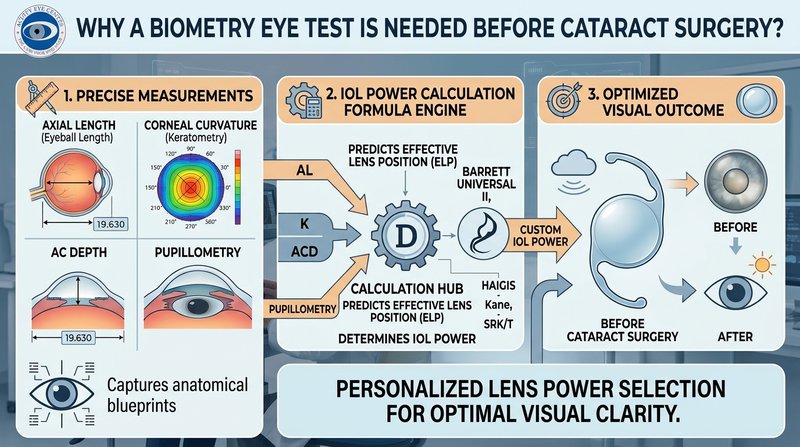
Before cataract surgery, a biometry is performed to help determine the correct artificial lens that will replace the cloudy natural lens.

The biometry allows the surgical team to make accurate calculations, although no test can guarantee a specific visual result. Other factors—including the health of the cornea, retina, optic nerve, previous eye surgery, and your visual expectations—also influence the final outcome.

Acuity Eye Center offers biometry eye testing and IOL calculation as part of its comprehensive ophthalmic services.

Is a Biometry Eye Test Painful?

A biometry eye test is usually painless. Most modern optical biometry devices are non-contact, meaning they measure your eye without touching its surface.

If a dense cataract or another condition prevents accurate optical measurements, your ophthalmologist may recommend an alternative method to complete the biometry eye test.

What Can Affect the Accuracy of a Biometry Eye Test?

The accuracy of a biometry eye test can be influenced by several factors, including:

  • Dense cataracts
  • Corneal irregularities
  • Difficulty maintaining steady fixation
  • Previous laser vision correction or refractive surgery
  • Other eye diseases

If necessary, your ophthalmologist may repeat the biometry eye test or use another measurement technique to improve accuracy.

The American Academy of Ophthalmology also notes that cataract planning considers corneal power, anterior chamber depth, retinal health, and optic nerve condition in addition to biometry measurements.

Questions to Ask Before Your Biometry Eye Test and IOL Calculation

To better understand your treatment plan, consider asking:

  • Which measurements were taken during my biometry eye test?
  • Were the measurements reliable and repeatable?
  • Which IOL options are suitable for my eyes?
  • Will I need additional tests such as corneal topography?
  • How much will I still depend on glasses after surgery?
  • Could another eye condition affect my final vision?

What Should You Bring to Your Biometry Eye Test Appointment?

To get the most from your biometry eye test, bring:

  • Your current glasses
  • Previous eye examination reports
  • A list of medications
  • Records of previous eye surgeries

Also inform your ophthalmologist if you have diabetes, glaucoma, retinal disease, or have previously undergone laser vision correction.

Final Takeaway

A biometry eye test is a key step in planning cataract or lens replacement surgery. It provides detailed eye measurements that help your ophthalmologist choose the most appropriate intraocular lens for your individual eye. While a biometry eye test greatly improves surgical planning, the final visual outcome also depends on your overall eye health and other clinical factors. Discuss your measurements and treatment options with your ophthalmologist to understand what results are realistically achievable.

Wednesday, 6 May 2026

Angio OCT: Enhancing patient understanding at Acuity Eye Center

Understanding eye health can feel overwhelming for many patients. At Acuity Eye Center, we strive to make things simpler and clearer. One of the advanced tools we utilize to achieve this is Angio Optical Coherence Tomography (Angio-OCT), which is powered by Nidek. This cutting-edge technology plays a crucial role in our comprehensive eye care services, fostering better understanding and confidence among our patients, including the use of Dragonfly opStar™.

What is Angio OCT?

Angio OCT represents a leap forward in the field of eye diagnostics. This non-invasive imaging test provides detailed images of the retina's blood vessels without the need for dye injections. It captures high-resolution cross-sectional images, allowing doctors to examine each of the retina's distinctive layers, including the macula. This technology is particularly useful in diagnosing and monitoring diseases like age-related macular degeneration and diabetic eye disease, enabling early detection and management of disease progression. The high sensitivity of this advanced technology helps in accurately diagnosing progressive eye diseases and monitoring retinal microvasculature.

How Angio OCT benefits our patients

  1. Non-invasive experience
    Patients appreciate the comfort offered compared to older methods. The procedure is quick and doesn't require any injections or contact with the eye, minimizing discomfort and stress. This contributes significantly to patient safety and comfort.
  2. Precise diagnostics
    Our team can detect subtle changes, such as microaneurysms, in the retina much earlier than traditional methods. This accuracy enables early disease detection and proactive management, providing more treatment options and improved patient outcomes.
  3. Clear communication
    The clarity of Angio OCT images allows us to explain conditions and treatment plans with greater transparency. We can show patients exactly what we see, which enhances their understanding and contributes to a trustworthy relationship.

Application of Angio OCT in various eye conditions

Managing diabetic eye disease

Patients with diabetes are often concerned about their eye health. Angio OCT enables us to spot early signs of diabetic retinopathy and abnormal telangiectatic vessels before symptoms develop, allowing timely intervention. Our approach integrates advanced technology with patient education to effectively manage this condition.

Monitoring macular degeneration

For those diagnosed with age-related macular degeneration, Angio OCT is invaluable. It helps in regularly monitoring the condition's progression, ensuring our treatment approaches are tailored to each patient’s changing needs. This allows for more appropriate treatment based on individual OCTA findings, particularly focusing on the outer retina and retinal nerve fiber layer.

Our commitment to patient-centered care

At Acuity Eye Center, we are committed to utilizing the latest technologies to enhance patient care. The trust placed in our esteemed professionals, such as Dr. Zia ul Mazhry, underscores our dedication to excellence. Beyond technology, our focus is on delivering compassionate, tailored care to all patients.

Why choose Acuity Eye Center?

Our center is more than just a place for eye testing. We offer a holistic approach to eye health, featuring services from advanced glaucoma surgery to laser vision correction. By integrating Angio OCT and other state-of-the-art technologies, we ensure a comprehensive, reassuring patient experience.

For more information on how we can help you with your eye health, visit our website. At Acuity Eye Center, enhancing your vision and understanding is at the heart of everything we do.

Tuesday, 4 March 2025

Glasses Removal with Latest Femto Laser

Get Rid of Glasses and contact lenses with lastest femto laser

For many individuals, the daily routine of wearing glasses can be cumbersome. From dealing with foggy lenses to constantly cleaning smudges, the inconvenience is undeniable. Fortunately, advancements in eye care technology have paved the way for innovative solutions that offer freedom from glasses. One such groundbreaking development is glasses removal with the latest Femto Laser technology.

Understanding Femto Laser Technology

laser treatmnet for removal of glasses | Femto Lasik

Femto laser technology represents a significant leap forward in refractive surgery. Unlike traditional methods, which often involve mechanical blades, femto lasers utilize ultrafast laser pulses to create precise corneal incisions. This precision allows for highly accurate corneal reshaping, addressing common vision issues such as myopia (nearsightedness), hyperopia (farsightedness), and astigmatism.

How Does It Work?

The femto laser operates at incredibly high speeds—measured in femtoseconds (one quadrillionth of a second). This rapid pulsing capability enables surgeons to perform intricate procedures with minimal tissue disruption. The process typically involves two key steps:

  1. Creating the Corneal Flap: The femto laser creates a thin flap on the cornea's surface.
  2. Reshaping the Cornea: Once the flap is lifted, an excimer laser reshapes the underlying corneal tissue according to individual visual requirements.

This bladeless approach enhances surgical precision and significantly reduces recovery time and potential complications.

Benefits of Glasses Removal with the Latest Femto Laser

benefits of glasses removal with the latest femto laser

Choosing femto laser vision correction offers several advantages over traditional methods:

  • Enhanced Precision: The ultrafast pulses allow for extremely precise cuts and reshapes, improving overall outcomes.
  • Reduced Risk: The non-mechanical nature of femto lasers minimizes risks associated with blade-based surgeries.
  • Faster Recovery: Patients often experience quicker healing times and can return to their normal activities sooner.
  • Customizable Treatment: The technology allows for personalized treatment plans tailored to each patient's unique visual needs.
  • Improved Quality of Life: Achieve clearer vision without the hassle of glasses or contact lenses.

Who Is an Ideal Candidate?

While femto laser surgery presents numerous benefits, it’s essential to determine if you are an ideal candidate for this procedure. Generally, suitable candidates include:

  • Individuals aged 18 or older
  • Those with stable vision prescriptions for at least one year
  • Patients free from certain eye conditions such as severe dry eyes or keratoconus
  • Individuals without autoimmune diseases that could affect healing

A thorough consultation with an eye care professional is crucial to assess suitability and discuss potential risks and benefits.

Post-Surgery Care and Expectations

Understanding post-surgery care is vital for optimal results and smooth recovery:

  • Immediate Aftercare: Following surgery, patients may temporarily experience mild discomfort or blurry vision. Eye drops are prescribed to aid healing and prevent infection.
  • Follow-Up Visits: Regular follow-up appointments ensure proper healing and monitor progress.
  • Activity Restrictions: Avoid strenuous activities or rubbing your eyes during initial recovery to prevent complications.

Most patients notice significant improvement in their vision within days, although full stabilization may take several weeks.

Conclusion

The advent of glasses removal with the latest Femto Laser technology has revolutionized vision correction, offering a safe and effective alternative for those seeking freedom from glasses. With its enhanced precision, reduced risk profile, and faster recovery times, it stands out as a superior option compared to traditional methods. If you’re considering this life-changing procedure, consult a qualified eye care specialist who can guide you through every step towards achieving clearer vision without glasses.

At Acuity Eye Center, we are committed to providing comprehensive eye care services tailored to meet your individual needs using the latest advancements in technology like femto lasers—ensuring excellence in patient care at every stage of your journey towards improved eye health and quality of life.

to achieve

Wednesday, 20 November 2024

Dry Eyes After Cataract Surgery

Cataract surgery, a common and generally safe procedure, has restored clear vision to millions of people worldwide. However, like any medical intervention, it can have some side effects. One of the frequently reported issues is dry eyes after cataract surgery. Understanding why this happens and how to manage it can significantly enhance your recovery experience.

What Causes Dry Eyes Post-Surgery?

Dry eye syndrome (DES) occurs when the eyes do not produce enough tears or when the tears evaporate too quickly. This condition can lead to discomfort, visual disturbances, and potential damage to the ocular surface. After cataract surgery, several factors contribute to the development of dry eye symptoms.

Surgical Impact on Tear Production

The cataract procedure itself can temporarily disrupt normal tear production. The incisions made during surgery may affect the nerves in the cornea, which are responsible for stimulating tear secretion. This disruption can lead to reduced tear production and dry eyes.

Inflammation and Eye Dryness

Cataract surgery involves manipulating ocular tissues, which can induce an inflammatory response. Inflammation, in turn, affects the meibomian glands (oil glands in your eyelids), reducing their ability to secrete oils that prevent rapid evaporation of tears. This contributes to dryness post-surgery.

Pre-existing Conditions and Their Impact on Dry Eye Symptoms

Patients with pre-existing dry eye conditions are more likely to experience exacerbated symptoms after cataract surgery. Additionally, age-related changes in tear composition and production make older adults more susceptible to eye dryness after the procedure.

Recognizing Symptoms of Post-Surgical Dry Eyes

Common symptoms of dry eyes following cataract surgery include:

  • Itching or burning sensation: A persistent feeling of itchiness or a burning sensation.
  • Redness: Visible redness around the eye area.
  • Blurry vision: Temporary blurriness that improves with blinking.
  • Foreign body sensation: Feeling as though there is something gritty or sandy in your eye.
  • Excessive tearing: Paradoxically, some people might experience excessive tearing as a reflex response to dryness.

Tips for Managing Dry Eyes After Cataract Surgery

Managing post-surgical dry eye effectively requires a combination of self-care practices and medical interventions tailored to individual needs.

Artificial Tears and Lubricants

Over-the-counter artificial tears can provide immediate relief by supplementing natural tear production. Preservative-free formulations are recommended as they are gentler on sensitive, post-surgery eyes.

Prescription Medications for Severe Symptoms

In cases where over-the-counter solutions are insufficient, our ophthalmologists may prescribe medications such as cyclosporine (Restasis) or lifitegrast (Xiidra), which help increase tear production by reducing inflammation.

Warm Compresses and Lid Hygiene

Applying warm compresses helps stimulate oil secretion from meibomian glands, while maintaining good lid hygiene prevents blockage of these glands, ensuring better tear quality.

Omega-3 Supplements for Better Tear Quality

Dietary supplements containing omega-3 fatty acids have been shown to improve symptoms by enhancing oil layer stability in tears, thus reducing evaporation rates.

Punctal Plugs for Severe Dryness

For severe cases unresponsive to other treatments, punctal plugs may be inserted into tear ducts, preventing drainage and keeping more moisture on the ocular surface.

Preventive Measures for a Smoother Recovery

Taking preventive steps before cataract surgery can minimize risks associated with postoperative dryness:

  • Preoperative Assessment: Ensuring thorough preoperative assessment, including screening for existing dry eye conditions, allows for proactive management strategies.
  • Hydration: Maintaining adequate hydration levels supports overall tear film health.
  • Avoidance of Environmental Triggers: Reducing exposure to wind, smoke, or air conditioning helps maintain optimal moisture levels around your eyes.
  • Omega-3 Rich Diet: Incorporating foods rich in omega-3 fatty acids, such as fish oil, into diets before surgery enhances baseline tear quality, aiding quicker recovery.

Conclusion

Experiencing dry eyes after cataract surgery is relatively common but manageable with appropriate care strategies. Tailored specifically to individual needs, this ensures comfort throughout recovery so that the clear vision restored by surgery remains uncompromised. By addressing symptoms proactively, patients can significantly improve their quality of life and confidently enjoy a clear vision journey.

Wednesday, 11 September 2024

Best Eye Specialist in Lahore-Acuity Eye Center

Why Acuity Eye Center is Your Go-To Choice for Eye Care

Choosing the right eye specialist is essential for your vision and health. At Acuity Eye Center, our team delivers top-quality care led by the best eye specialist in Lahore. We ensure every patient receives the best treatment in a friendly, professional environment.

Expert Care by the Best Eye Specialist in Lahore

Best eye specialist in lahore-Acuity eye Center
Photographer: Eyeacuity | Copyright: Zia ul Mazhry

At Acuity Eye Center, the best eye specialist in Lahore offers expert care for a wide range of eye conditions. Our specialists have 30 years of experience treating patients. Whether you need an eye exam, Cataract surgery, LASIK, or glaucoma treatment, we tailor each treatment to your needs. Our goal is to help you achieve and maintain healthy vision.

State-of-the-art technology for Eye Care

Best Eye Specialist in Lahore-Dr Zia ul Mazhry- Slit Lamp eye  Exam
Photographer: Eyeacuity | Copyright: Zia ul Mazhry

Acuity Eye Center uses the latest technology to provide precise and effective care. Our clinic offers laser eye surgery, eye disease treatment, and prescription services, all performed with cutting-edge tools. When you visit the best eye specialist in Lahore, you can trust that we will deliver the highest standard of care with advanced equipment.

Personalized Treatment Plans

We believe that every patient deserves personalized care. The best eye specialist in Lahore will take time to understand your concerns and perform a thorough eye exam. Based on your unique needs, we create a treatment plan specifically for you. Your eye health is our priority.

Introducing Dr. Zia ul Mazhry: Leading Consultant at Acuity Eye Center

Dr. Zia ul Mazhry, our esteemed leading consultant at Acuity Eye Center. With years of specialized experience and a commitment to excellence, Dr. Mazhry is renowned as one of the best eye specialists in Lahore. His expertise spans a wide range of eye care services, from routine exams to advanced surgical procedures. Dr. Mazhry combines cutting-edge technology with personalized care to improve patient outcomes and enhance vision health to provide exceptional treatment. Trust your eye health to a true leader in the field—Dr. Zia ul Mazhry.

Why Choose Acuity Eye Center?

Choosing the best eye specialist in Lahore can have a significant impact on your vision and quality of life. At Acuity Eye Center, we focus on providing patient-centered care. Our team offers a wide range of services, from routine eye exams to advanced surgical treatments. We ensure that every patient feels confident and well cared for throughout their visit.

Book Your Appointment Today

Best eye Specialist in Lahore-Book an Appointment with Acuity eye Center

If you are looking for the best eye specialist in Lahore, look no further than Acuity Eye Center. Whether you need routine care, treatment for a specific condition, or advice on improving your vision, we are here to help. Schedule your appointment today by calling us at +92 3111 000 366 or emailing us at eyeacuity@gmail.com. Experience the highest level of eye care available in Lahore!

Friday, 23 August 2024

Best Eye Care in Lahore-Acuity Eye Center

Best Eye Care in Lahore-Acuity Eye Center

Finding the right eye care provider is crucial for maintaining optimal vision and overall eye health. In Lahore, Acuity Eye Center stands out as a beacon of excellence, offering comprehensive services tailored to meet the diverse needs of patients. Acuity Eye Center is the Best Eye Care in Lahore, highlighting its advanced treatments. Patient-centered approach, and commitment to enhancing quality of life through improved vision.

Comprehensive Services for All Ages

Comprehensive Services for All Ages

At Acuity Eye Center, patients have access to a full spectrum of eye care services. Whether you are seeking routine check-ups or specialized treatments, their team of dedicated professionals is equipped to handle it all. From pediatric eye exams to geriatric eye care, they ensure that every patient receives personalized attention and treatment plans tailored to their specific needs.

Advanced Glaucoma Surgery

Glaucoma is a serious condition that can lead to irreversible vision loss if not treated promptly. The specialists at Acuity Eye Center employ cutting-edge technology and techniques for glaucoma surgery, ensuring the best possible outcomes for their patients. Their expertise in this area underscores their commitment to preserving vision and preventing further damage.

Phaco Treatment for Cataracts with Multifocal IOL Implantation

Phaco Treatment for Cataracts with Multifocal IOL Implantation

Cataracts are a common issue among older adults, but they don't have to compromise your quality of life. Acuity Eye Center offers the latest phacoemulsification (phaco) treatment combined with multifocal intraocular lens (IOL) implantation. This advanced procedure not only removes cataracts but also improves overall vision quality, reducing dependence on glasses or contact lenses.

Laser Treatment for Vision Correction

Laser Treatment for removal of glasses

Acuity Eye Center offers a safe and effective solution for those looking to correct refractive errors such as myopia, hyperopia, or astigmatism. Acuity Eye Center utilizes laser technology to provide precise and minimally invasive vision correction procedures. Patients can expect quick recovery times and significant improvements in their visual acuity.

Focus on Diabetic Eye Disease

Diabetes can have severe implications for eye health, leading to conditions like diabetic retinopathy which can threaten vision if left untreated. The Acuity Eye Center team strongly emphasizes early detection and management of diabetic eye disease. Through regular screenings and advanced treatment options, they help patients manage this condition effectively and maintain good ocular health.

Managing Common Conditions: Eye Strain and Changes in Eye Color

In today's digital age, eye strain has become increasingly prevalent due to prolonged screen time. Acuity Eye Center provides valuable insights into managing this condition through ergonomic adjustments, regular breaks from screens, and appropriate eyewear solutions.

Changes in eye color can be a natural part of aging but may also indicate underlying health issues. The experts at Acuity Eye Center offer thorough examinations to determine the cause of any changes in eye color and provide appropriate interventions when necessary.

Conclusion

Acuity Eye Center's dedication to providing comprehensive and personalized eye care makes them the premier choice for residents of Lahore seeking top-notch ophthalmic services. Their utilization of the latest technology coupled with a compassionate approach ensures that each patient receives exceptional care aimed at enhancing their quality of life through improved vision.

Choosing an experienced and reputable provider like Acuity Eye Center (Best Eye Care in Lahore) means entrusting your ocular health to professionals who prioritize your well-being above all else. Whether you need routine check-ups or advanced surgical interventions, you can rest assured that you're in capable hands at Acuity Eye Center.

Friday, 7 June 2024

June is Cataract Awareness Month

June is Cataract Awareness Month

June marks a significant period in the healthcare calendar as it is designated Cataract Awareness Month. This month serves as an opportunity to educate the public about cataracts, their impact on vision, and the importance of early detection and treatment. Cataracts are one of the leading causes of vision impairment worldwide, but with timely intervention, they can be effectively managed.

Understanding Cataracts

Cataracts occur when the lens of the eye becomes cloudy, leading to a decrease in vision. This condition typically develops slowly and can affect one or both eyes. The primary symptom is blurred vision, which can interfere with daily activities such as reading, driving, or recognizing faces.

Causes and Risk Factors for Cataract

Causes and Risk Factors for Cataract

Several factors contribute to the development of cataracts:

  • Aging: Most cataracts are age-related and develop as people get older.
  • Genetics: A family history of cataracts can increase your risk.
  • Medical Conditions: Diabetes and other health issues can accelerate cataract formation.
  • Lifestyle Choices: Smoking, excessive alcohol consumption, and prolonged exposure to sunlight without adequate protection are known risk factors.
  • Medications: Long-term use of certain drugs like corticosteroids can lead to cataract development.

Symptoms to Watch For

Symptoms to Watch for Cataracts

Early symptoms of cataracts may be subtle but become more pronounced over time:

  • Blurred or cloudy vision
  • Difficulty seeing at night
  • Sensitivity to light and glare
  • Frequent changes in prescription glasses or contact lenses
  • Fading or yellowing of colors
  • Double vision in a single eye

Recognizing these symptoms early on is crucial for effective management.

Diagnosis and Treatment Options

Regular eye exams are vital for detecting cataracts at an early stage. During an eye exam, an ophthalmologist will dilate your pupils to examine the lens for signs of cloudiness. Additional tests may include visual acuity tests and slit-lamp examinations.

Surgical Intervention

The primary treatment for advanced cataracts is surgery. Modern techniques have made cataract surgery highly successful with minimal risks. One common method is phacoemulsification (phaco), where an ultrasonic device breaks up the cloudy lens into small pieces that are then removed from the eye. The natural lens is replaced with an artificial intraocular lens (IOL).

At Acuity Eye Center, we offer advanced treatments such as Multifocal IOL implantation during cataract surgery. These lenses provide clear vision at multiple distances, reducing dependency on glasses post-surgery.

Preventative Measures and Lifestyle Changes

While some risk factors like aging cannot be controlled, you can take steps to reduce your chances of developing cataracts:

  1. Regular Eye Exams: Schedule comprehensive eye exams annually if you’re over 60 or have risk factors.
  2. Protect Your Eyes from UV Rays: Wear sunglasses that block 100% UVA and UVB rays.
  3. Healthy Diet: Consume a diet rich in antioxidants found in fruits and vegetables.
  4. Manage Health Conditions: Keep chronic conditions like diabetes under control.
  5. Avoid Smoking: Quit smoking to reduce your risk significantly.
  6. Limit Alcohol Intake: Moderate your alcohol consumption.

Raising Awareness During Cataract Awareness Month

Cataract Awareness Month aims to inform and empower individuals to take proactive steps toward maintaining their eye health. Spread awareness by sharing information with friends and family members who might be at risk.

Encourage them to schedule regular eye exams—early detection can prevent severe visual impairment caused by untreated cataracts.

Conclusion

Cataract Awareness Month reminds us all about the importance of vigilant eye care practices. By understanding the causes, recognizing symptoms early on, and seeking timely medical advice from professionals like those at Acuity Eye Center, we can effectively manage this common yet treatable condition—ensuring better quality of life through improved vision health year-round!

Thursday, 18 January 2024

Glaucoma Awareness Month

January is recognised as Glaucoma Awareness Month, a time dedicated to raising awareness about this sight-threatening disease. Glaucoma is often called the "silent thief of sight" because it can progress slowly and without noticeable symptoms until significant vision loss occurs.

جنوری کو گلوکوما آگاہی مہینہ کے طور پر پہچانا جاتا ہے، یہ ایک ایسا وقت ہے جو بینائی کے لیے خطرناک بیماری کے بارے میں بیداری پیدا کرنے کے لیے وقف ہے۔ گلوکوما کو اکثر "نظر کا خاموش چور" کہا جاتا ہے کیونکہ یہ آہستہ آہستہ اور نمایاں علامات کے بغیر بڑھ سکتا ہے جب تک کہ بصارت میں نمایاں کمی واقع نہ ہو جائے۔

Understanding Glaucoma

Glaucoma is a group of eye conditions that damage the optic nerve, which is responsible for transmitting visual information from the eye to the brain. The most common type of glaucoma, called primary open-angle glaucoma, occurs when there is an increase in intraocular pressure (pressure inside the eye) that damages the optic nerve over time.

گلوکوما آنکھوں کے مسائل کا ایک گروپ ہے جو آپٹک نرو کو نقصان پہنچاتا ہے، جو بصری معلومات کو آنکھ سے دماغ تک پہنچانے کی ذمہ دار ہے۔ گلوکوما کی سب سے عام قسم، جسے پرائمری اوپن اینگل گلوکوما کہا جاتا ہے، اس وقت ہوتا ہے جب آنکھ کے اندر دباؤ میں اضافہ ہوتا ہے جو وقت کے ساتھ ساتھ آپٹک نرو کو نقصان پہنچاتا ہے۔

Risk Factors and Prevention

Risk Factors

While anyone can develop glaucoma, certain factors may increase your risk:

  • Age: The risk of developing glaucoma increases with age.
  • Family History: Having a close relative with glaucoma puts you at higher risk.
  • Ethnicity: People of African, Hispanic, or Asian descent are more prone to developing certain types of glaucoma.
  • Medical Conditions: Diabetes, high blood pressure, and heart disease may increase your risk.

Although there is no known way to prevent glaucoma entirely, early detection and treatment can help slow down its progression and minimize vision loss. Regular comprehensive eye exams are crucial for detecting signs of glaucoma before it causes irreversible damage.

Glaucoma Damage

Symptoms and Diagnosis

In its early stages, glaucoma typically does not cause any noticeable symptoms. As the disease progresses, however, individuals may experience:

  • Gradual loss of peripheral vision
  • Tunnel vision
  • Blurred vision
  • Halos around lights
  • Severe eye pain or headache (in cases of acute angle-closure glaucoma)

If you experience any of these symptoms or have concerns about your eye health, it is important to schedule an appointment with an eye care professional for a comprehensive examination.

Here is the message from our lead consultant Dr Zia Ul Mazhry,

Glaucoma is known as a silent killer of sight in English. Sariq un Nazar is the name given to it in Arabic, meaning thief of the sight. Patients are often surprised when their ophthalmologist tells them they have glaucoma because they don’t have symptoms. There is no need to be scared about the diagnosis as many modern treatments can prevent further loss in glaucoma. The good news is that today’s innovative treatments and surgical techniques are better than ever.” What matters is a timely diagnosis which may be accomplished by careful testing and investigations by a caring ophthalmologist.”

گلوکوما کو انگریزی میں نظر کا خاموش قاتل کہا جاتا ہے۔ سارق النظر عربی میں اس کا نام ہے جس کا مطلب نظر کا چور ہے۔ مریض اکثر حیران ہوتے ہیں جب ان کے ماہر امراض چشم انہیں بتاتے ہیں کہ انہیں گلوکوما ہے کیونکہ ان میں علامات نہیں ہوتی ہیں۔ تشخیص کے بارے میں گھبرانے کی ضرورت نہیں ہے کیونکہ بہت سے جدید علاج گلوکوما میں مزید نقصان کو روک سکتے ہیں۔ اچھی خبر یہ ہے کہ آج کے جدید علاج اور جراحی کی تکنیکیں پہلے سے بہتر ہیں۔ جو چیز اہمیت رکھتی ہے وہ بروقت تشخیص ہے جو ایک دیکھ بھال کرنے والے ماہر امراض چشم کی محتاط جانچ اور تحقیقات سے مکمل ہو سکتی ہے۔

Treatment Options

While there is no cure for glaucoma, treatment options aim to control the disease and prevent further vision loss. The most common treatments include:

  • Eye Drops: Medications are often prescribed to lower intraocular pressure.
  • Oral Medications: In some cases, oral medications may be used to reduce eye pressure.
  • Laser Therapy: Laser treatments can help improve the drainage of fluid from the eye or decrease fluid production.
  • Surgery: In advanced cases, surgical procedures may be necessary to lower intraocular pressure.

Treatment choice depends on various factors, including the type and severity of glaucoma.

Spreading Awareness

Glaucoma Awareness Month serves as a reminder for individuals to prioritize their eye health and schedule regular comprehensive eye exams. By spreading awareness about glaucoma, we can encourage early detection and prompt treatment, ultimately preserving vision and improving quality of life.

گلوکوما آگاہی کا مہینہ لوگوں کے لیے اپنی آنکھوں کی صحت کو ترجیح دینے اور آنکھوں کے باقاعدہ جامع چیک اپ کا شیڈول بنانے کے لیے ایک یاد دہانی کا کام کرتا ہے۔ گلوکوما کے بارے میں آگاہی پھیلا کر، ہم جلد پتہ لگانے اور فوری علاج کی حوصلہ افزائی کر سکتے ہیں، بالآخر بصارت کو محفوظ کر کے اور معیار زندگی کو بہتر بنا سکتے ہیں۔

If you have any concerns about your eye health or would like more information about glaucoma, contact our team at Acuity Eye Center. We are here to support you in maintaining optimal eye health.

Thursday, 16 November 2023

November is Diabetic Eye Disease Month

November is Diabetic Eye Disease Month

November is recognized as Diabetic Eye Disease Month, dedicated to raising awareness about this serious condition that affects millions of people worldwide. Diabetic eye disease refers to a group of eye problems that can occur as a result of diabetes, including diabetic retinopathy, diabetic macular edema, cataracts, and glaucoma.

Understanding Diabetic Eye Disease

Diabetic retinopathy is the most common form of diabetic eye disease and occurs when high blood sugar levels damage the blood vessels in the retina. Over time, this can lead to vision loss or even blindness if left untreated. Diabetic macular edema, on the other hand, involves swelling in the macula, which is responsible for central vision.

Cataracts are another common complication of diabetes, where clouding occurs in the lens of the eye. This can cause blurred vision and difficulty seeing clearly. Lastly, glaucoma is a condition that damages the optic nerve and can result in peripheral vision loss.

Understanding Diabetic Eye Disease

Importance of Early Detection

One of the key messages during Diabetic Eye Disease Month is the importance of early detection. Regular eye exams are crucial for individuals with diabetes to monitor their eye health and catch any potential issues before they progress. By detecting diabetic eye disease at an early stage, treatment options may be more effective in preventing further damage.

Managing Diabetes for Healthy Eyes

In addition to regular eye exams, managing diabetes effectively plays a significant role in maintaining healthy eyes. Keeping blood sugar levels within a target range through proper diet, exercise, medication (if prescribed), and regular monitoring can help minimize the risk of developing diabetic eye disease.

It's also essential to maintain good overall health by adopting a healthy lifestyle that includes eating nutritious meals, staying physically active, getting enough sleep, managing stress levels effectively, and avoiding smoking or excessive alcohol consumption.

Managing Diabetes for Healthy Eyes

Spread Awareness

During Diabetic Eye Disease Month, it's crucial to spread awareness about the importance of eye health for individuals with diabetes. By sharing information, resources, and personal experiences, we can encourage others to prioritize regular eye exams and take steps towards better managing their diabetes.

Remember, early detection and proactive management are key to preventing vision loss associated with diabetic eye disease. Let's work together to ensure that everyone with diabetes has access to the necessary care and support for healthy eyes.

If you or someone you know has diabetes, make sure to schedule a comprehensive eye exam today. Your eyesight is worth it!

Here is the message of our Lead consultant Professor Dr. Zia Ul Mazhry

"Diabetic retinopathy is a scientific term that means damage to the retina caused by leaky vessels of new vessel formation on the retina. Early detection is the key to damage control and devising a treatment plan. Moreover, by managing diabetes, you can reduce the progression of this disease affecting your eyesight. Patients having a high risk of diabetic retinopathy should know that regular examination and follow-up by a qualified eye specialist is the only way to timely diagnoses of this blinding disease. The sooner the diagnosis is established, the better custom treatment plan can be materialized."

Conclusion

Diabetic Eye Disease Month serves as a reminder of the potential risks that individuals with diabetes face when it comes to their vision. By understanding the different types of diabetic eye disease, emphasizing early detection, and managing diabetes effectively, we can help reduce the impact of this condition on people's lives. Let's join forces in spreading awareness and ensuring that everyone receives the necessary care for healthy eyes.

Thursday, 15 June 2023

Limbal Dermoid

A 12-year-old boy presented to us with history of swelling in his right eye since birth and difficulty in vision for the last 2-3 years. The swelling was soft, localised, elevated, opaque, yellow-white mass located on the inferior temporal limbus at 7-8’o clock, there were fine hair present on the surface of swelling. Cycloplegic auto-refraction of the patient showed SPH +3.25 with CYL +5.00 at 118 degrees in right eye and SPH +1.25 with CYL +2.50 at 91 degrees. The patient had significant astigmatism in his right eye. Rest of the clinical examination of the patient was normal including anterior segment examination and retinal examination. The diagnosis of Limbal Dermoid was subsequently made and patient was advised excision.

Limbal dermoids are benign tumors that are choristomas (normal tissue at an abnormal site). Dermoid contains hair, adipose tissue, and squamous epithelium, presence of these findings is almost always pathognomic. Limbal dermoids are usually not inherited, however familial presentation of limbal dermoids in association with systemic disorders, such as Goldenhar syndrome is well known. Other associated ocular abnormalities include colobomata of the eyelids, lacrimal anomalies, scleral and corneal staphylomata, aniridia, and microphthalmia. Limbal dermoids can cause cosmetic disfigurement along with pressure symptoms on cornea leading to astigmatism and amblyopia in younger children. Prognosis generally is favorable and diagnosis is clinical.

The treatment approach for limbal dermoids may involve various methods depending on the specific case. These can include regular removal of irritating cilia, using topical lubrication to prevent foreign body sensation, or opting for surgical excision if the dermoid causes significant cosmetic disfigurement or vision interference.

Surgical intervention should be considered when the potential benefits, such as improved vision or cosmetic appearance, outweigh the risks associated with scar formation or surgical complications. The decision to proceed with surgery should be carefully evaluated, taking into account the individual patient's needs and circumstances.

Limbal Dermoid in a 12 years old patient, note the fine hairs on the surface and surface keratinization.

Thursday, 4 August 2022

August 2022 Children’s Eye Health & Safety Month

August 2022 Children’s Eye Health & Safety Month

Is Too Much Screen Time Harming Children’s Vision?

Acuity Eye Center Lahore Pakistan and the American Academy of Ophthalmology help parents separate facts from fiction.

As children spend more time tethered to screens, there is increasing concern about potential harm to their visual development. Ophthalmologists – physicians who specialize in medical and surgical eye care – are seeing a marked increase in children with dry eye and eye strain from too much screen time. But does digital eyestrain cause lasting damage? Should your child use reading glasses or computer glasses? As you send your kids back to school this month for more time with screens and books, Acuity Eye Center Lahore Pakistan and the American Academy of Ophthalmology are arming parents with the facts, so they can make informed choices about their children’s eye health.

It’s a fact that there is a worldwide epidemic of myopia, also known as nearsightedness. Since 1971, the incidence of nearsightedness in the US nearly doubled, to 42 percent. In Asia, up to 90 percent of teenagers and adults are nearsighted. Clearly, something is going on. But scientists can’t agree on exactly what.

A new study appearing in Ophthalmology, the journal of the American Academy of Ophthalmology, offers further evidence that at least part of the worldwide increase in nearsightedness has to do with near work activities; not just screens but also traditional books. And, that spending time outdoors—especially in early childhood—can slow the progression of nearsightedness. It remains unclear whether the rise in nearsightedness is due to focusing on phones all the time, to light interacting with our circadian rhythms to influence eye growth or none of the above.

Digital Strain

Digital Strain

While scientists look for a definitive answer, there is no doubt that most computer users experience digital eyestrain. Kids are no different from adults when it comes to digital eyestrain. They can experience dry eye, eye strain, headaches, and blurry vision, too. While symptoms are typically temporary, they may be frequent and persistent.

But this doesn’t mean they need a prescription for computer glasses or that they have developed an eye condition of middle-age that requires reading glasses, as some suggest. It also doesn’t mean that blue light coming from computer screens is damaging their eyes. It means they need to take more frequent breaks. This is because we don’t blink as often while using computers and other digital devices. Extended reading, writing, or other intensive work can also cause eye strain. Ophthalmologists recommend taking a 20-second break from near work every 20 minutes.

Here are 10 tips to help protect your child’s eyes from computer eyestrain

Here are 10 tips to help protect your child’s eyes from computer eyestrain:

  • Set a kitchen timer or a smart device timer to remind them.
  • Alternate reading an e-book with a real book and encourage kids to look up and out the window every two chapters
20-20-20 Rule
  • After completing a level in a video game, look out the window for 20 seconds.
  • Pre-mark books with a paperclip every few chapters to remind your child to look up. On an e-book, use the “bookmark” function for the same effect.
  • Avoid using a computer outside or in brightly lit areas, as the glare on the screen can create strain.
  • Adjust the brightness and contrast of your computer screen so that it feels comfortable for you.
  • Use good posture when using a computer and when reading.
Encourage your child to hold digital media farther away, 18 to 24 inches is ideal.
  • Encourage your child to hold digital media farther away, 18 to 24 inches is ideal.
  • Create a distraction that causes your child to look up every now and then.
  • Remind them to blink when watching a screen.

“I prefer to teach kids better habits, instead of supplying them a crutch like reading glasses to enable them to consume even more media,” said K. David Epley, M.D., clinical spokesperson for the American Academy of Ophthalmology. “If you run too far and your legs start hurting, you stop. Likewise, if you’ve been reading too long or watching videos too long, and your eyes start hurting, you should stop.”

Here is the message from our lead consultant Professor Dr. Zia Ul Mazhry,

"Your child’s vision is critical and even more critical is protecting it during everyday activities. Eye injuries occur most commonly during outdoor sports or athletics. The parents and guardians need to pay close attention as a caregiver. If the kids are left alone, will often opt to not wear protective eyewear when playing sports, let alone a helmet, due to a number of reasons. Therefore, it’s up to you to ensure your child’s eyes and vision are kept safe."

About the American Academy of Ophthalmology

The American Academy of Ophthalmology is the world’s largest association of eye physicians and surgeons. A global community of 32,000 medical doctors, we protect sight and empower lives by setting the standards for ophthalmic education and advocating for our patients and the public. We innovate to advance our profession and to ensure the delivery of the highest-quality eye care. Our EyeSmart® program provides the public with the most trusted information about eye health. For more information, visit aao.org.

Contact Our Team:

If you are looking for any of the below services, please fill out the form below, one of our team members will get in to provide you with full facilitation:

1– Comprehensive Primary Eye Exam/ Consultation

Consultation ::: Adult Eye Examination and Consultation

Consultation ::: Children Eye Examination Refraction Consultation

Consultation ::: Infant Eye Examination Refraction Consultation

2-Secondary Follow-up Eye Examination and Consultations

Followup ::: Examination under Sedation for Kids (After Initial Consultation)

Followup ::: Dilated Fundus Examination(DFE)

Followup ::: Cycloplegic Refraction and DFE

3-Diagnostic Eye Test

Diagnostic ::: OCT

Diagnostic ::: Angio OCT

Diagnostic ::: Anterior Segment OCT

Diagnostic ::: Pachymetry

Diagnostic ::: Perimetry / Visual Fields

Diagnostic ::: Hess Chart/Digital Squint Assessment/Digital Diplopia Test

Diagnostic ::: Digital Colour vision test

Wednesday, 20 July 2022

Eye UV Safety Awareness Month

July is Eye UV Safety Awareness Month

How to Pick the Best Sunglasses to Protect Your Eyes

Acuity Eye Center Lahore Pakistan and the American Academy of Ophthalmology offer seven tips for choosing sunglasses that protect against the sun's damaging UV rays

ایکویٹی آئی سنٹر لاہور پاکستان اور امریکن اکیڈمی آف اوفتھلمولوجی دھوپ کے چشموں کے انتخاب کے لئے سات تدابیر پیش کرتی ہے جو سورج کی نقصان دہ یووی کرنوں سے بچاتا ہے

Sunglasses aren't an optional summertime accessory, they're an essential prescription for eye health. Long-term exposure to the sun without proper protection can increase the risk of eye disease, including cataracts, growths in the eye, and eye cancer. As summer gets underway, Acuity Eye Center Lahore Pakistan, and the American Academy of Ophthalmology share seven essential tips for buying the best sunglasses to protect your eyes.

دھوپ کے چشمے موسم گرما کے وقت اختیاری لوازمات نہیں ہیں ، وہ آنکھوں کی صحت کے لیے ایک ضروری نسخہ ہیں۔ مناسب حفاظت کے بغیر دھوپ میں طویل مدتی نمائش سے آنکھوں کے مرض کا خطرہ بڑھ سکتا ہے ، بشمول سفید موتیا ، آنکھ میں نمو اور آنکھ کا کینسر۔ جیسے جیسے موسم گرما کا آغاز ہورہا ہے ، ایکیوئٹی آئی سنٹر لاہور پاکستان اور امریکن اکیڈمی آف اوفتھلمولوجی آپ کی آنکھوں کی حفاظت کے لیے بہترین دھوپ کے چشمے خریدنے کے لئے سات ضروری نکات شیئر کررہی ہے۔

Choose sunglasses that block 99 to 100 percent of both UVA and UVB radiation.

Labels can sometimes be confusing. Some indicate sunglasses offer 100 percent protection from UVA/UVB radiation, others offer 100 percent UV 400 protection. Rest assured, both will block 100 percent of the sun's harmful radiation.

Doubt the UV protection label?

Take your sunglasses to an optical shop or an ophthalmologist’s office. Most have a UV light meter that can test the UV-blocking ability of sunglasses.

Buy oversized.

The more coverage from sunglasses, the less sun damage inflicted on the eyes. Consider buying oversized glasses or wraparound-style glasses, which help cut down on UV entering the eye from the side.

Don't be fooled by the color.

While dark lenses may look cool, they do not block more UV rays.

You don't need to pass on cheap sunglasses.

Sunglasses don't have to cost a lot of money to provide adequate eye protection. Less expensive pairs marked as 100 percent UV-blocking can be just as effective as pricier options.

Don't forget the kids.

Children are just as susceptible to the sun's harmful rays as adults. Start them on healthy habits early.

Consider polarized lenses.

Polarization reduces glare coming off reflective surfaces like water or pavement. This does not offer more protection from the sun but can make activities like driving or being on the water safer or more enjoyable.

Even short-term exposure can damage the eyes. Sun reflecting off water can cause a painful sunburn called photokeratitis on the front part of the eye. It causes redness, blurry vision, sensitivity to bright light, and, in rare cases, even temporary vision loss.

"Think of sunglasses as sunscreen for your eyes," said Dianna Seldomridge, MD, clinical spokesperson for the American Academy of Ophthalmology. "Your eyes need protection from the sun's damaging ultraviolet rays just like your skin. Make sure your eyes are protected year-round. Harmful UV rays are present even on cloudy days."

آپ کی آنکھوں کو بھی آپ کی جلد کی طرح سورج کی نقصان دہ الٹرا وائلٹ شعاعوں سے تحفظ کی ضرورت ہے۔ اس بات کو یقینی بنائیں کہ آپ کی آنکھیں سال بھر محفوظ رہیں۔ نقصان دہ الٹرا وائلٹ سورج کی کرنیں ابر آلود دنوں میں بھی موجود رہتی ہیں۔

Here is the message from our lead consultant Professor Dr. Zia Ul Mazhry,

" Life without eyes is not easy, take care of them. Your eyes are your most important tools – Protect them! You and Your kids need to wear eye-protective glasses because the eyes are vulnerable to any type of UV damage."

آنکھوں کے بغیر زندگی آسان نہیں ہے ، ان کا خیال رکھنا چاہیے۔ آپ کی آنکھیں آپ کے سب سے اہم اوزار ہیں – ان کی حفاظت کریں! آپ کو اور آپ کے بچوں کو آنکھوں کے حفاظتی چشمے پہننے کی ضرورت ہے کسی بھی طرح کی بالائے بنفشی شعاعیں آنکھوں کو نقصان پہنچا سکتی ہیں۔

About the American Academy of Ophthalmology

The American Academy of Ophthalmology is the world’s largest association of eye physicians and surgeons. A global community of 32,000 medical doctors, we protect sight and empower lives by setting the standards for ophthalmic education and advocating for our patients and the public. We innovate to advance our profession and to ensure the delivery of the highest-quality eye care. Our EyeSmart® program provides the public with the most trusted information about eye health. For more information, visit aao.org

Contact Our Team:

If you are looking for any of the below services, please fill the form below, one of our team members will get in to provide you with full facilitation:

1– Comprehensive Primary Eye Exam/ Consultation

Consultation ::: Adult Eye Examination and Consultation

Consultation ::: Children Eye Examination Refraction Consultation

Consultation ::: Infant Eye Examination Refraction Consultation

2-Secondary Follow-up Eye Examination and Consultations

Followup ::: Examination under Sedation for Kids (After Initial Consultation)

Followup ::: Dilated Fundus Examination(DFE)

Followup ::: Cycloplegic Refraction and DFE

3-Diagnostic Eye Test

Diagnostic ::: OCT

Diagnostic ::: Angio OCT

Diagnostic ::: Anterior Segment OCT

Diagnostic ::: Pachymetry

Diagnostic ::: Corneal Topography

Diagnostic ::: IOL Master Biometry

Diagnostic ::: Perimetry / Visual Fields

Diagnostic ::: Hess Chart/Digital Squint Assessment/Digital Diplopia Test

Diagnostic ::: Digital Colour vision test

Friday, 29 April 2022

Healthy Vision Awareness Month

The Health Exam You Didn’t Know You Needed

Acuity Eye Center Lahore Pakistan and the American Academy of Ophthalmology say blindness is often preventable with regular exams

If you’re like most Americans surveyed in a recent Harris Poll, you probably thought you would notice a change in your vision if you had an eye disease. The fact is some of the leading causes of blindness—such as glaucoma or diabetic retinopathy—can begin without any symptoms. That’s why Acuity Eye Center Lahore Pakistan and the American Academy of Ophthalmology urge all healthy adults to get an eye exam at age 40, even if their vision seems fine. Early signs of disease and changes in vision may start to happen at this age.

“Even if you think you have 20/20 vision, set up a time to get your eyes checked. It may save your sight,” said Dianna Seldomridge, M.D., clinical spokesperson for the American Academy of Ophthalmology.

Here is the message of our lead consultant Professor Zia Ul Mazhry

There is a saying"Eyes are the windows to the soul".Healthy Vision is one of the best blessings of Almighty Allah at any given age. To protect your vision by quitting smoking, eating healthy foods, and having a regular comprehensive eye examination.

ایک کہاوت ہے "آنکھیں روح کی کھڑکیاں ہیں" ۔ درست بینائی کسی بھی عمر میں اللہ تعالٰی کی دی ہوئی بہترین نعمت ہے۔ لہذا تمباکو نوشی چھوڑ کر ، صحت مند غذائیں کھا کر اور آنکھوں کا باقاعدگی سے معائنہ کر وا کر اپنی نظر کی حفاظت کریں۔

5 Steps to Lower Your Risk of Eye Disease

  • Know your family history

Certain eye diseases can be inherited. If you have a close relative with macular degeneration, you have a 50 per cent chance of developing this condition. A family history of glaucoma increases your glaucoma risk by four to nine times. Talk to family members about their eye conditions. It can help you and your ophthalmologist evaluate your risk.

آنکھوں کی بعض بیماریاں وراثت میں مل سکتی ہیں۔ اگر آپ کسی میکولر انحطاط کے مریض کے ساتھ قریبی رشتہ ہے تو ، آپ میں بھی اس بیماری کے پیدا ہونے کا 50 فیصد امکان ہے۔ اگر آپ کے خاندان میں کسی کو گلوکوما ہے تو آپ کی آنکھوں میں گلوکوما کے خطرے کو چار سے نو گنا بڑھاتا ہے۔ کنبہ کے افراد سے ان کی آنکھوں کے حالات کے بارے میں بات کریں۔ اس سے آپ اور آپ کے امراض چشم کو آپ کی آنکھوں میں ہونے والی بیماری کےخطرے کا اندازہ کرنے میں مدد مل سکتی ہے۔

  • Eat healthy foods

A diet low in fat and rich in fruits, vegetables, and whole grains, benefits the entire body, including the eyes. Eye-healthy food choices include citrus fruits, vegetable oils, nuts, whole grains, dark green leafy vegetables, and cold-water fish.

چربی کی کم مقدار اور پھل ، سبزیاں ، اور سالم گندم سے بھرپور غذا ، آنکھوں سمیت پورے جسم کو فائدہ پہنچاتی ہے۔ آنکھوں سےمتعلق صحت مند کھانے کے انتخاب میں کھٹ مٹھے رسیلے پھل ، سبزیوں کا تیل ، گری دار میوے ، سالم گندم ، گہری سبز پتی دار سبزیاں ، اور ٹھنڈے پانی کی مچھلیاں شامل ہیں۔

  • Stop smoking

Smoking increases the risk for eye diseases such as cataracts and age-related macular degeneration. Smoking also raises the risk for cardiovascular diseases which can indirectly influence your eye health. Tobacco smoke, including second-hand smoke, also worsens dry eyes.

تمباکو نوشی سے آنکھوں کی بیماریوں جیسے سفید موتیا اور عمر سے وابستہ میکولر انحطاط کا خطرہ بڑھ جاتا ہے۔ تمباکو نوشی سے دل کی بیماریوں کا خطرہ بھی بڑھ جاتا ہے جو آپ کی آنکھوں کی صحت کو بالواسطہ اثر انداز کر سکتا ہے۔ تمباکو کا دھواں ، آنکھوں کو بھی خشک کردیتا ہے۔

  • Wear sunglasses

Exposure to ultraviolet UV light raises the risk of eye diseases, including cataracts, fleshy growths on the eye, and cancer. Always wear a hat and sunglasses with 100 per cent UV protection while outdoors.

“An eye exam doesn’t just check how well you can see, it evaluates the overall health of your eyes,” said Rebecca J. Taylor, M.D., clinical spokesperson for the American Academy of Ophthalmology. “The Academy encourages everyone, particularly if you’re over age 40, to get regular eye care. By making the vision a priority, we can help protect our sight as we age.”

About the American Academy of Ophthalmology

The American Academy of Ophthalmology is the world’s largest association of eye physicians and surgeons. A global community of 32,000 medical doctors, we protect sight and empower lives by setting the standards for ophthalmic education and advocating for our patients and the public. We innovate to advance our profession and to ensure the delivery of the highest-quality eye care. Our EyeSmart® program provides the public with the most trusted information about eye health. For more information, visit aao.org.

About Eye Health education by Acuity Eye Center Lahore

Welcome to the Education Portal of Acuity Eye Centre Lahore Pakistan. We are committed to serving our patients and our community, to the development and propagation of new concepts to preserve and enhance our vision. Our three missions—clinical service, education, and research—are closely interrelated. https://eyeacuity.com/education

Contact Our Team:

If you are looking for any of the below services, please fill the form below, one of our team members will get in to provide you with full facilitation:

1– Comprehensive Primary Eye Exam/ Consultation

Consultation ::: Adult Eye Examination and Consultation

Consultation ::: Children Eye Examination Refraction Consultation

Consultation ::: Infant Eye Examination Refraction Consultation

2-Secondary Follow up Eye Examination and Consultations

Followup ::: Examination under Sedation for Kids (After Initial Consultation)

Followup ::: Dilated Fundus Examination(DFE)

Followup ::: Cycloplegic Refraction and DFE

3-Diagnostic Eye Test

Diagnostic ::: OCT

Diagnostic ::: Angio OCT

Diagnostic ::: Anterior Segment OCT

Diagnostic ::: Pachymetry

Diagnostic ::: Perimetery / Visual Fields

Diagnostic ::: Hess Chart/Digital Squint Assessment/Digital Diplopia Test

Diagnostic ::: IOL Master

Diagnostic ::: Corneal Topography

Diagnostic ::: Digital Colour vision test